
I've shown a lot of homes over the years across Encinitas, Carlsbad, Cardiff, Oceanside, and everywhere in between. And one thing I've noticed that never changes: buyers almost never walk out talking about square footage. They say things like "it just felt right" or "I could picture us there on a Sunday morning."
That's not a coincidence. When a buyer walks into a home, they're catching feelings more than they're thinking logically. The home that feels right wins. Full stop.
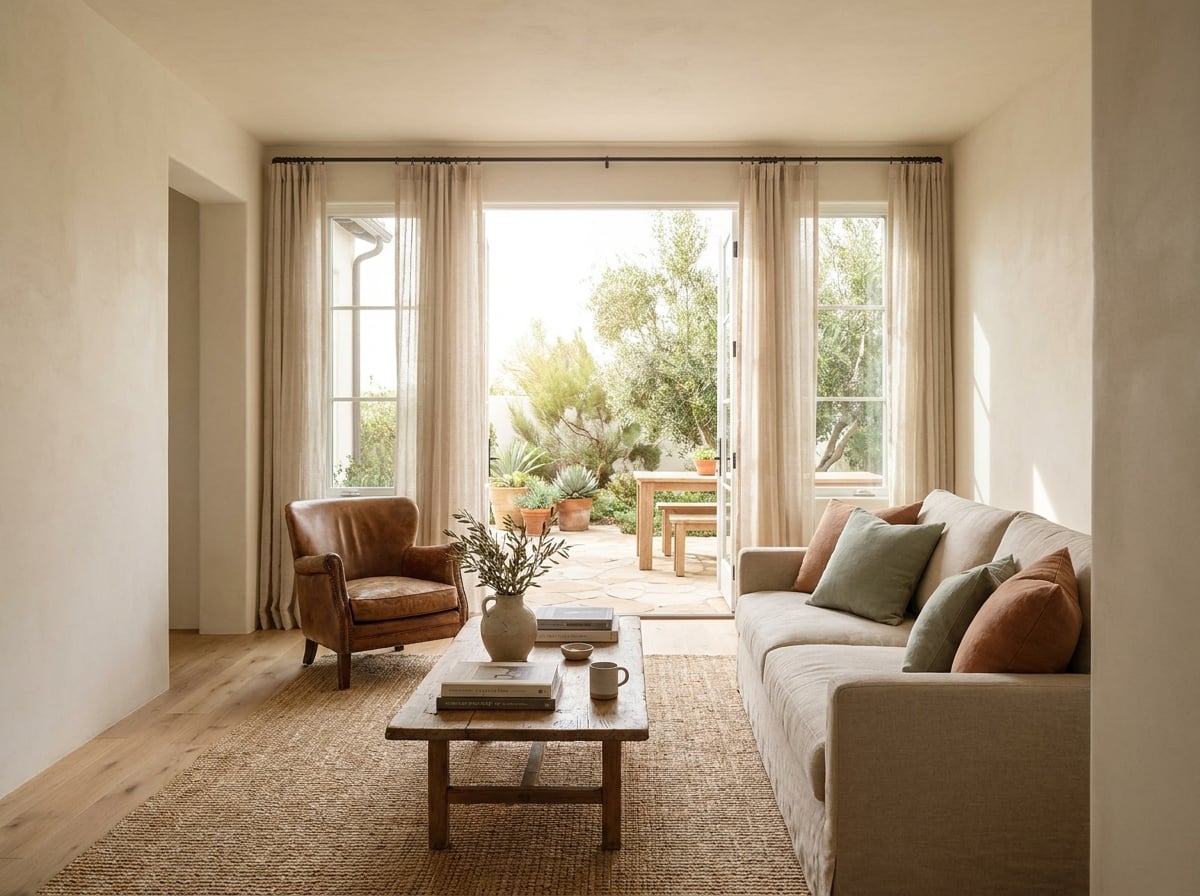
Right now, what's making homes feel right has everything to do with warmth, a little character, and spaces that look like someone actually lives there well.
Key Takeaways
Buyers decide emotionally first. A home that feels warm and livable often beats one that looks perfect but cold.
Houzz's Fall 2026 Design Trends Report interviewed nearly 50 design professionals and confirmed it: collected, layered interiors with warm materials are what people want right now.
"Personal" and "depersonalized" are not opposites. The goal before a sale is selective editing, not stripping a home bare.
Warm neutrals, natural wood, earthy textures, and a few intentional pieces read well to buyers without making the home feel like it belongs to someone else.
The living room, primary bedroom, kitchen, entry, and best outdoor space deserve the most attention before listing.
In North County, the lifestyle sells as much as the home. Outdoor flow, natural light, and easy everyday living matter here in ways that go beyond a checklist.
Property preparation and staging help buyers visualize a home, but neither can fix a price that's off, visible deferred maintenance, or a floor plan that genuinely doesn't work.
Why Do Buyers Fall for Homes That Feel Right?
Here's something worth knowing before you start prepping your home: 83% of buyers' agents said staging made it easier for buyers to picture a property as their future home, according to NAR's 2025 Profile of Home Staging.
But that number only makes sense if you understand what's behind it.
Most buyers can't mentally furnish an empty room. They get distracted by a cluttered one. And they struggle to see past a space that reads as someone else's life. When a home is prepared well, buyers stop doing that mental work and just start feeling at home. That's when you get offers.
What creates that feeling is pretty straightforward:
Furniture at the right scale: Oversized pieces shrink a room. Proportional ones open it up.
Clear circulation: Buyers want to move through a space without navigating obstacles.
Natural light: Unobstructed windows and lighter window treatments get noticed every time.
A clear purpose for each room: Buyers shouldn't have to guess what a space is for.
One honest caveat: staging cannot compensate for a price that doesn't match the market, visible deferred maintenance, or a floor plan with real problems. Presentation helps. It's just not a substitute for getting the fundamentals right.
Which Design Details Create Warmth and Character?
The Houzz Fall 2026 report is pretty clear on this. Homeowners and buyers are done with the all-white, cool-gray everything look. They want depth. They want rooms that feel like they came together over time, not rooms that were purchased in a single weekend at a big box store.
For sellers, that's genuinely good news. You don't need to gut your home. You need to edit it thoughtfully.
The details that land well with buyers right now:
Warm wood tones: Natural grain, stained cabinetry, open wood shelving. Houzz's 2026 kitchen data found that wood cabinet colors edged out white for the first time, with 29% of renovating homeowners choosing wood versus 28% choosing white. If you have solid wood cabinetry, think twice before painting over it.
Earthy, warm neutrals: Cream, warm white, sage, clay, soft terracotta. Inviting without being polarizing.
Natural textures: Linen, rattan, woven textiles, stone surfaces, handmade tile. These add something you can feel in person and also read well in photos.
A few intentional accents: A brass fixture with a little patina, a handcrafted ceramic, one piece of vintage furniture placed with purpose. Designer Eric Goranson, quoted in New American Funding's summary of the Houzz report, said it well: "A flawless finish used to be the selling point. Now it's the thing that makes a room feel unlived-in."
How Personal Should a Home for Sale Feel?
This is the question I hear most from sellers. They've been told to depersonalize, and then they read something like this and think, wait, so should I leave my stuff or not?
The answer is: it depends on what the stuff is doing.
The goal is to let the home tell a story without telling your story. Those are different things, and the line matters.
Keep:
Art that reads well in the space and doesn't carry obvious personal weight
Books styled on shelves or a coffee table
One or two vintage or artisan pieces that add warmth
Original architectural details, exposed beams, handcrafted tile, built-ins, anything that makes the home feel distinct
Edit out:
Dense family photo galleries
Collections that crowd surfaces or compete for attention
Personal documents, mail, anything identifying
Items that make a buyer feel like a guest in someone else's home rather than a future resident of their own
A good rule of thumb: if something helps the room feel warm and livable, it probably stays. If it anchors the home to a specific person's life in a way that makes it hard for someone else to picture themselves there, it goes.
Which Rooms Shape a Buyer's First Impression?
Not every room carries equal weight. Buyers form impressions fast, and a few spaces drive most of the emotional response.
The rooms worth prioritizing:
Living room: This is where buyers spend the most mental time during a showing. Furniture placement, light, and a sense of ease matter more here than anywhere else.
Primary bedroom: Buyers want to feel like this is a retreat. Clean lines, good bedding, and minimal surface clutter go a long way.
Kitchen: Usable counter space matters more than new appliances. Clear surfaces, clean hardware, and a sense of function are more persuasive than a full renovation.
Entry: First impressions happen in seconds. The entry sets the tone for the whole showing before a buyer has seen anything else.
Best outdoor space: In North County especially, the outdoor area is often what closes the deal. More on that below.
If your budget and time are limited, start here.
How Should North County Homes Show the Local Lifestyle?
Buyers coming to Encinitas, Cardiff, Carlsbad, Oceanside, or anywhere else in North County aren't just shopping for a house. They're shopping for a life. That's a real distinction when you're preparing a home for the market here.
Most of these buyers have already decided they want the lifestyle. The home just needs to feel like it delivers it.
What that looks like is different for every property:
A Cardiff beach cottage where the outdoor shower, board storage, and wetsuit hooks are clean and clearly thought about tells a buyer exactly who this home is for.
A Leucadia bungalow with original wood floors and vintage tilework is worth preserving. That character is the appeal, not something to paint over.
A Carlsbad patio staged with a dining table and outdoor lighting shows buyers what a Tuesday night looks like. That's memorable.
A Vista home with mature landscaping and a shaded seating area makes outdoor living tangible in a way a bare yard never will.
One practical note for Encinitas sellers: properties on the city's local historic register require exterior modification review before you alter character-defining features. Check before touching anything on the exterior. Those details are often selling points anyway.
And please, skip the obligatory seashells and anchors. Buyers see through a forced coastal theme. Let the home and its location speak for themselves.
What Should Sellers Update Before Listing?
Not everything needs to change. That's probably the most useful thing I can say here.
The question isn't "what can I do?" It's "what will actually matter to a buyer?" Those are very different lists.
A simple way to think about it:
Decision | What It Means |
|---|---|
Repair | Fix visible defects before buyers or inspectors find them |
Remove | Clear anything that distracts from the home itself |
Refresh | Update tired finishes that date the home without major cost |
Preserve | Leave original details and character features that add appeal |
Before spending money on a renovation, look at what's competing nearby. If comparable homes in your price range have updated kitchens and yours doesn't, that's worth knowing. If your home has more character or a better outdoor space than the competition, lean into that instead.
I walk through every home before we list and give sellers a specific, prioritized list based on their home, their price point, and the likely buyer. If you'd like that conversation, I'm easy to reach through pondteamrealestate.com.
Frequently Asked Questions
Should I Repaint Cool Gray Walls Before Selling?
Not automatically. Test a warm neutral against your existing flooring and the light in that specific room first. If the gray reads clean and works with what's already there, leaving it alone is often the right call.
Can I Stage My Home With Furniture I Already Own?
Yes, in most cases. The edit matters more than a full replacement. Removing oversized, worn, or excess pieces often does more than bringing in new ones.
Are Vintage Pieces a Good Choice for Home Staging?
One or two intentional accents work well and add real character. A room crowded with collected pieces tends to read as personal rather than inviting.
Is Virtual Staging Enough for a Vacant Home?
Virtual staging helps buyers understand a room online, but it doesn't replace the in-person experience of scale, light, and feel. For higher-price listings, physical staging typically performs better.
How Early Should I Start Preparing My Home for Sale?
Work backward from your photography date. Repairs, editing, paint, and staging all take more time than people expect, and photography drives early online attention. Give yourself more runway than you think you need.
Check out this article next